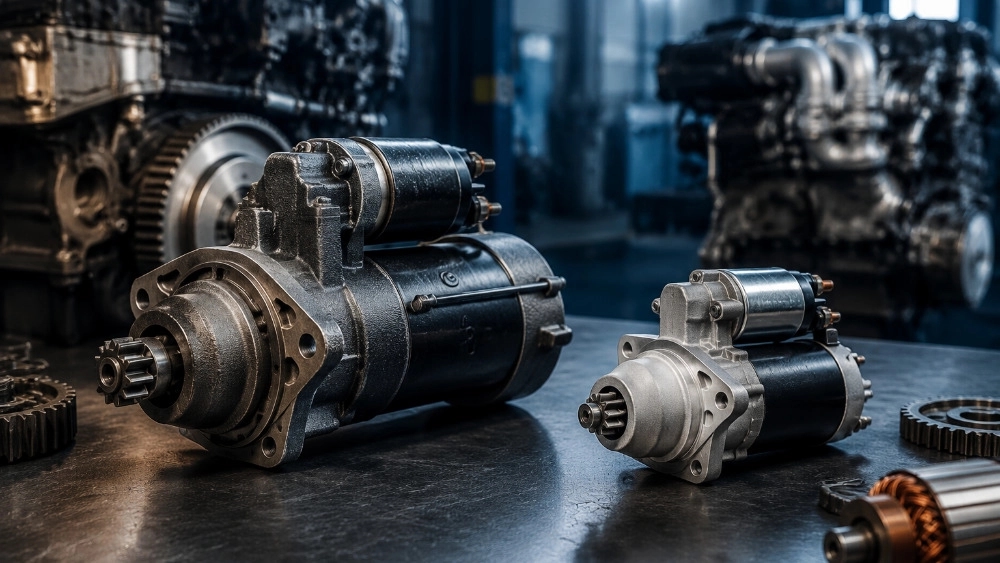
What is a motor starter and how does it work?
The difference between diesel and gasoline engine starters
- High starting torque
- High current resistant winding
- Sturdy body and shell
- Pressure resistant starter gear
- Suitable power to start the engine in cold weather
- Ability to work in industrial and agricultural machinery
- Good resistance to vibration and heavy working conditions
Gasoline starter features
- Dimensions suitable for light and semi-heavy engines
- Suitable rotation speed
- Current consumption according to battery capacity
- Easy installation in gasoline engines
- Precise coordination of gear with flywheel
- Usability in electric motors and portable equipment
The importance of choosing a starter suitable for the engine model
Important criteria in the diesel and gasoline starter buying guide
Starting power and torque
The number of starter teeth
The direction of rotation of the starter
Dimensions and type of installation base
The main components of the starter and their effect on quality
Application of diesel and gasoline starter in different equipment
Agricultural machinery starter
Construction equipment starter
Starters for industrial engines and pumps
- Slow rotation of the engine when starting
- Hearing a rattling sound without turning the crankshaft
- Free rotation of the starter without conflicting with the flywheel
- Creating a grinding noise when starting
- Disconnecting and connecting the starter function
- Overheating of the cables or the body
- Smelling the smell of burning from the part Start
- The engine does not turn on despite the health of the battery
- The starter remains engaged after the engine starts
The difference between a new starter and a repaired starter
The importance of checking the technical code and starter plate
Effect of battery and wiring on starter performance
The correct method of use to increase the life of the starter
- Avoid long and continuous starting.
- The battery should always be in a proper state of charge.
- Check the electrical connections periodically.
- Fix the oil or fuel leakage on the starter.
- Do not ignore the unusual noise of the gear and flywheel.
- After starting the engine, the starter command should not continue.
- System fault Refueling or ignition should be fixed immediately.
- When washing the engine, do not let high-pressure water reach the starter.
- Part installation should be done by a person familiar with the engine's electrical system.
Why Navin Sanat is the right choice for buying a starter?
- Specialized examination of motor type and device application
- Regarding the required voltage and power
- Adapting the number and dimensions of the teeth
- Checking the direction of rotation of the starter
- Paying attention to the bases and installation location
- Guidelines for identifying the technical code
- Recognizing the needs of industrial and agricultural equipment
- Emphasizing the technical compatibility of the product with the engine
- Providing practical information for selection Consciously
- attention to the quality of construction and durability of parts
The ultimate starter selection checklist
- Type of engine in terms of diesel or gasoline
- Exact engine brand and model
- Technical code of the previous starter
- Voltage of the electrical system of the device
- Power or technical specifications of the starter
- Number and dimensions of teeth
- Rotation direction of the part
- Number of screws and distance between the bases
- Automatic position of the starter
- Type Device usage
- Environmental conditions and usage rate
- Battery and power cables condition
- Flywheel gear health
- Clear pictures of the previous part and installation location
Specialized purchase of starter for heavy use
The role of principle installation in the performance of the starter